



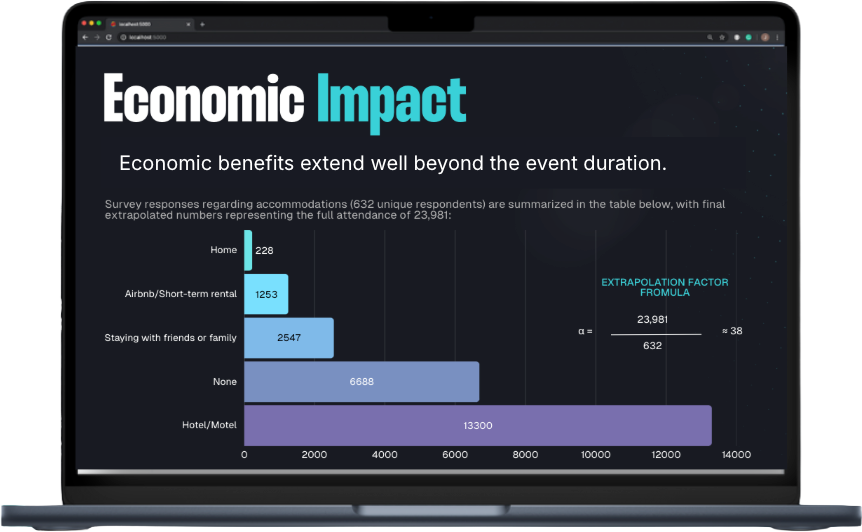




Choosing the right sports marketing approach comes down to one question: where are your target families actually paying attention? Digital ads reach a broad audience on paper, but experiential marketing activations at basketball showcases and soccer tournaments reach families in person, during weekends when they are already spending and open to trying new brands. This guide compares digital and experiential approaches, breaks down what separates effective sports marketing firms from the rest, and shows how brands build measurable household-level relationships through youth sports events.
Executive Summary:
- Comparing digital advertising to youth sports experiential marketing requires looking at audience quality, access cost, and attribution accuracy, not merely impression counts
- Youth sports events deliver captive family audiences across entire weekends when digital ads fail
- The market generates $52.2 billion in travel spending, outpacing spectator sports' $47.1 billion
- 80% of parents view sponsors more favorably when they support local programs, creating trust that digital impressions can't match
- Fragmentation blocks scale: brands can't negotiate 500 separate tournaments per national campaign
- Fastbreak Connect aggregates thousands of youth events into one marketplace with verified ROI tracking
What Is Experiential Marketing in Youth Sports

The Rising Stars Cup: A Real-World Activation Example
Experiential marketing in youth sports creates physical brand interactions at tournaments and events where families spend entire weekends. The Rising Stars Cup, an academy-level youth soccer tournament near Washington, D.C. founded by Aarin Foye, shows exactly what that looks like in practice. The event attracted clubs like RB Leipzig, Philadelphia Union, Chicago Fire, and NY Red Bulls, bringing in families from across the country for multi-day competition at a high level. Those families weren't scrolling past banner ads. They were on-site for the full weekend, moving between matches, filling rest periods, and actively spending in the surrounding area. Brands that activated at the Rising Stars Cup set up sampling stations, interactive booths, and product trials directly in that environment. The tournament's competitive draw created the audience; the format created the access. That combination (captive families, high emotional investment, and extended dwell time) is what separates youth sports experiential marketing from digital advertising that gets blocked or ignored. At tournaments like the Rising Stars Cup, brands earn attention during moments families carry long after the weekend ends, in an environment no digital placement can replicate.
How Youth Sports Access Differs from Professional Venues
Youth sports offers different access than professional leagues. The global sports sponsorship market reached $65.70 billion in 2025 and is projected to reach $145.08 billion by 2034, but Straits Research notes that escalating sponsorship costs at major events have become a serious barrier, pricing out smaller brands and leaving high-profile inventory to well-known firms with large marketing budgets. Youth tournaments give brands direct reach to Gen Z athletes and their families without competing for that overpriced professional-venue inventory. A brand that can't afford a stadium naming-rights deal or a league-level jersey sponsorship can still run a fully staffed product activation at a regional basketball showcase, reaching hundreds of families over a three-day weekend at a fraction of the cost. That access gap is why youth sports has become a primary channel for consumer brands building long-term household relationships.
Why Brands Are Shifting Marketing Budgets to Youth Sports in 2026
The $52 Billion Case for Youth Sports Marketing
According to Sports ETA's 2023 Economic Impact report, youth sports tourism generated $52.2 billion in travel-related spending, outpacing spectator sports tourism's $47.1 billion. Marketers recognize these events deliver captive audiences without the premium pricing of professional leagues. Traditional advertising channels in professional sports are facing multiple challenges: increasing sponsorship costs, shrinking inventory, and diminishing returns. It's no wonder brands are looking at youth sporting events. Those events offer something that may be cost-prohibitive or impossible at professional sporting events: a physical touchpoint. For CPG brands, beverage companies, and health and wellness labels, the ability to put a product directly in an athlete's hands during a break between games is a conversion mechanism that no banner ad or social post can replicate.
Youth sports solves those challenges. 80% of parents view sponsors more favorably when they support local programs, creating trust that digital impressions can't match. Parents interpret brand presence at tournaments as community investment instead of interruption. Effective youth sports marketing turns that goodwill into measurable household-level relationships.
Digital Advertising vs. Experiential Marketing: What Each Channel Can and Cannot Do
Where Digital Advertising Has the Advantage
Digital advertising excels at reach, speed, and cost per impression. A well-targeted campaign can put a brand in front of thousands of households in hours, scale up or down based on budget, and generate trackable clicks within minutes of launch. For brands building awareness in new markets or testing messaging before a larger investment, digital channels give you real-time feedback that an event activation cannot match. Retargeting tools also let brands follow up with users who showed intent but did not convert, extending the window of influence past the initial impression.
Where Experiential Marketing Has the Advantage
Experiential marketing wins on depth, trust, and memory. Families at a youth sports tournament are not multitasking. They have committed a full weekend, they are in a high-emotion environment, and they are actively spending. A product sample handed to a 15-year-old between games, or a hydration station that a parent relied on across three days, creates a brand association that no banner ad can replicate. Physical interaction also bypasses ad blockers, feed algorithms, and the scroll reflex that makes digital impressions increasingly shallow.
Why Sports Marketing Firms That Combine Both Outperform
The strongest sports marketing firms build campaigns where digital and experiential work in sequence. On-site activations generate first-party data, product trial, and authentic content. Digital retargeting then re-engages the families who participated, extending the campaign well past the event weekend. Brands that rely on only one channel leave value on the table. The combination, with verified attendee data connecting both sides, is where measurable household-level results actually happen.
How Gen Z Athletes and Their Parents Create a Multi-Generational Marketing Opportunity
What Gen Z Athletes Want from Brand Interactions
Gen Z athletes require a different approach than past generations. Only 20% of Gen Z adults call themselves avid sports fans, compared to 33% of Millennials. Logo visibility alone won't register. These athletes want interactive setups like photo backdrops, skill challenges, or product sampling that create shareable content instead of static booths. A brand activation that gives a 16-year-old something worth posting (a skill challenge result card, a branded photo, a product sample they actually use between games) earns organic reach across their network in ways that paid social inventory cannot buy. The brands winning with Gen Z at youth sports events are designing for participation, not for exposure.
How Parents Assess Brands During Tournaments
Youth sports events put two distinct decision-makers in the same space at the same time: the athlete and the parent. While the athlete shapes brand preferences and future buying behavior, the parent controls spending in the moment. Activations that miss either group waste half the opportunity. Parents judge brands through a separate lens during the same activation. They notice community involvement, family product value, and whether the experience offsets tournament costs. When a hydration brand provides free water refills between games, the parent sees practical support while the athlete notices lifestyle fit. That dual read happens simultaneously at the same booth, and no other marketing channel can replicate it. A single well-designed activation can build household-level brand preference with the buyer who controls the credit card and the consumer who will influence purchases for years to come.
Keep in mind that emotional timing carries more weight than activation design. Families retain brand associations formed during championship runs, close losses, and breakthrough performances. Youth sports experiential marketing reaches both generations during high-attention weekends when impressions last.
Types of Experiential Marketing Activations for Youth Sports
Youth sports activations work when they match the environment. Between-game downtime, captive family audiences, and multi-day formats create opportunities that don't exist in spectator sports.
| Activation Type | Primary Benefit | Best For |
|---|---|---|
| Product Sampling Stations | Direct trial generation with immediate consumption opportunity | CPG brands, sports nutrition, beverage companies |
| Interactive Skill Challenges | Social content creation and athlete engagement through gameplay | Sports equipment, apparel brands, tech companies |
| Branded Fan Zones | Extended dwell time connecting brand to comfort during long tournament days | Financial services, automotive, travel brands |
| Mobile Marketing Tours | Large-scale experiential presence with memorable interactive elements | National brands launching new products or campaigns |
| Athlete Appearances | Association with aspirational figures and moment creation families remember | Performance brands, training services, sports organizations |
Putting Each Activation Type to Work
Product sampling stations let brands distribute trial products directly to families between matches. Sports nutrition companies hand out protein bars, beverage brands provide samples, and apparel companies distribute branded gear. The objective is trial generation when parents and athletes are actively consuming similar products. Gatorade used this format through Fastbreak Connect, putting product samples into athletes' hands at tournaments across the country and reaching youth consumers at the exact moment they needed hydration and were most open to the brand.
Interactive skill challenges, though, turn brand engagement into competition. For example, basketball shooting contests, soccer accuracy targets, or volleyball serve challenges let athletes interact with sponsors through gameplay. These setups generate social content when participants share results and create visible activity across tournament venues. Adidas applied this approach across youth tournament activations, creating skill-based experiences that put the brand inside competitive moments and opened doors for thousands of athletes to engage with it directly.
Branded fan zones convert wait time into sponsored experiences. Lounge areas with seating, phone charging, and shade give parents relief between games while connecting the brand to comfort during long tournament days. Duluth Trading Co. used this format at the JVA Chi-Town Boys Challenge, building a presence during family downtime between matches that tied the brand to the practicality and comfort parents depend on across multi-day competitions.
Mobile marketing tours bring larger activations directly to event sites using experiential marketing vehicles, while athlete appearances from college or professional players create moments families associate with sponsoring brands.
The Economic Footprint of Youth Sports Tourism
Why Tournament Families Are Already in Spending Mode
Youth sports tournaments generate concentrated spending that digital advertising can't access. Travel changes spending behavior. Families attending weekend tournaments book hotels, eat restaurant meals, and make retail purchases in destination cities. They've already committed to trip expenses before arriving, putting them in active spending mode throughout the event. Brands activating on-site reach families during heightened purchasing windows instead of during routine daily activities at home. A family that drove four hours to attend a volleyball showcase has already budgeted for the weekend: hotel, meals, gas, and incidentals. That mental accounting changes their willingness to try new products and make purchases they'd pass on during a typical Tuesday at home.
What you have to keep in mind is that tournament environments concentrate this spending geographically and temporally. A single basketball showcase might bring 1,000 families to a city over three days, generating hotel nights, restaurant traffic, and retail shopping in focused areas near venues.
Overcoming the Fragmentation Challenge in Youth Sports Marketing
The real strategic value in youth sports marketing goes beyond reaching families; it's reaching both decision-makers at once. Kids drive discovery: the athlete who tries a product at a sampling station, competes in a branded skill challenge, or picks up gear at a booth is shaping household preferences and future buying behavior. Parents control purchase: the adults watching from the sideline make the spending decisions on groceries, apparel, subscriptions, and equipment. Youth sports tournaments are the only environment where both happen simultaneously, in person, across an entire weekend. That combination of buying influence and buying decisions together is the strategic unlock brands can't replicate through digital channels or professional sports sponsorships.
Why National Campaigns Break Down Across Youth Tournaments
The problem is scale. Brands that understand this opportunity still can't act on it efficiently. Youth sports operates through thousands of independent tournament directors, each running separate events with distinct contacts, varied formats, and conflicting calendars. A CPG brand targeting active families can't sign one sponsorship contract and reach both the athlete and the parent household across 500 tournaments; they'd need 500 individual negotiations across different states and organizers. Marketing teams won't allocate budgets to partnerships requiring separate negotiations per event, custom logistics for each venue, and different staffing at every location. The result: brands that know the audience is there still can't reach both decision-makers at scale. This is the coordination problem that has kept national consumer brands out of youth sports for years, even as the audience has grown. The math has never worked at the transaction level, and that's not a budget problem. It's a structural one.
How Aggregation Changes the Equation for Brands
Most software vendors in youth sports sell scheduling platforms. Fastbreak AI is something different: a revenue partner that turns core features into profit centers. Tournament directors running events on Fastbreak can generate $30k to $50k or more in total revenue per event through ticketing, housing rebates, and sponsorships, without raising team fees. That distinction matters for brands, because it changes who they're partnering with. You're not buying a logo placement from an administrator managing spreadsheets. You're activating inside a professionally run event where the organizer is already optimizing for revenue and family experience. For a national brand, that quality signal matters as much as the audience size. Events that are well run attract more families, generate better dwell time, and create the kind of environment where brand associations form instead of fade.
Fastbreak Connect solves both problems at once. When thousands of events flow into one marketplace where brands purchase activation access across multiple tournaments through a single agreement, the coordination barrier disappears. And because Fastbreak events are already generating revenue through ticketing, housing rebates, and sponsorship infrastructure, brands activate inside events that are built to perform, not merely events that are scheduled to happen.
Measuring ROI and Performance in Youth Sports Activations
First-Party Data as a Measurement Advantage
Brands need proof that youth sports activations drive business results beyond engagement theater. Sampling volume and booth traffic matter less than whether attendees convert into customers after the event ends. Youth sports creates measurement advantages that other sponsorship categories can't match. Tournament registration systems capture first-party data before families arrive, providing verified attendee lists with contact information brands can use for attribution tracking. Geolocation data shows where families traveled from and where they visited during the event, connecting activation exposure to subsequent retail visits or online purchases. Unlike a stadium sponsorship where impression counts are estimated from ticket sales and broadcast ratings, a tournament activation backed by registration data gives brands a verified audience count, household demographics, and the ability to follow up with exactly the families who attended. That goes beyond better measurement. It's a fundamentally different category of proof.
Family household targeting changes attribution models. When a brand samples a product to a 14-year-old athlete, they're also reaching the parent household that controls grocery purchases, apparel spending, and subscription decisions. Post-event surveys can track whether activated families made category purchases within 30 or 60 days, linking on-site impressions to actual sales lift.
The shift moves sponsorship evaluation from vanity metrics to performance reporting. Brands want cost per qualified lead, household penetration rates, and incremental revenue attributed to tournament activations instead of photo counts or social mentions that don't connect to business outcomes.
Five Questions to Ask Any Sports Marketing Firm Before Signing
Before committing budget to a sports marketing firm or youth sports activation partner, run through these five evaluation questions. The answers will separate firms that can deliver verified results from those that can only deliver attendance estimates.
- Does the platform use verified first-party registration data to count attendees, or does it estimate audiences from ticket sales and foot traffic?
- Can the firm connect on-site activation exposure to post-event household purchases within a defined attribution window of 30 to 60 days?
- What does the firm's in-event survey completion rate look like, and how does it verify responses came from actual attendees instead of general outreach panels?
- How does the firm handle national campaign scale. Do you negotiate a single agreement covering multiple events, or does each tournament require a separate contract and logistics team?
- What does the cost-per-qualified-lead calculation include, and how does the firm define a qualified lead versus a raw impression or booth visit?
Case Study: How Promino Built U.S. Market Presence Through Youth Sports Activations
From Market Entry Challenge to Measurable Brand Presence
Promino, a performance supplement brand backed by military and NASA research, entered the U.S. market facing a real challenge: the supplement category is crowded, and performance messaging saturates every digital channel. Promino's team needed to put the product directly into the hands of athletes at the moments that mattered, so they activated through Fastbreak Connect across youth and amateur sports events nationwide.
Fastbreak handled logistics, staffing, and brand ambassador training while Promino focused on strategy. Brand ambassadors distributed product samples post-game and post-race, QR codes drove attendees to custom direct-to-consumer landing pages, and photo stations generated shareable branded content. The activations delivered measurable results: 1,000+ product samples distributed per event, over 90% attendee engagement at each booth or sampling station, and 95% first-time brand exposure among attendees. Website traffic, opt-in rates, and sales lift all moved after each event. "Our initial Fastbreak events exceeded our expectations, kickstarting Promino's direct-to-consumer business with meaningful increases in traffic and sales," said Promino CEO Vito Sanzone. Read the full Promino case study.
How Fastbreak Connect Simplifies Brand Activation at Youth Sports Events
One Marketplace, Thousands of Events
Fastbreak Connect operates as a centralized marketplace where brands purchase activation access across thousands of youth tournaments through one partnership. In-event survey completion rates can reach 80 to 95%, based on Fastbreak platform data, giving brands the verified response volume needed to make measurement credible, not merely a claimed figure. The software aggregates 10,000+ youth events annually into buyable inventory, eliminating separate negotiations with individual tournament directors. Instead of building a field marketing team from scratch or negotiating with hundreds of organizers one at a time, brands access a ready-built network of professionally run events with existing registration data, housing infrastructure, and audiences who have already committed to attend.
What sets Connect apart is how that revenue growth happens. Gains from ticketing, travel, and sponsorships flow to organizers without raising team fees or adding administrative burden. Connect unlocks new income streams while keeping participation affordable for families, a distinction that matters when cost is one of the biggest barriers to youth sports access. Organizers get the revenue infrastructure of a professionally run event; families get a tournament experience that doesn't price them out.
Measurement connects to verified attendee data instead of estimated impressions. Because Fastbreak manages tournament registration systems, performance reports tie activations to actual participant lists, household locations, and post-event behavior tracking. Brands receive cost-per-lead calculations and attribution data instead of booth traffic estimates.
This model converts youth sports from a fragmented sponsorship category into a national activation channel. Marketing teams access concentrated family audiences across hundreds of events without building internal field operations or negotiating with individual organizers.
Final thoughts on activating at youth sports tournaments
Digital ads get blocked and scrolled past, but product sampling between volleyball matches reaches families when they're actually paying attention and actively spending. Software that connects experiential marketing campaigns to tournament registration data gives you attribution models that link on-site activations to household purchases weeks later. You don't need separate negotiations with 500 tournament directors anymore when aggregation technology pools that inventory into one buyable marketplace.
Why Youth Sports Events Are the Last Reliable Channel for Gen Alpha and Gen Z
Gen Alpha and Gen Z don't respond to digital advertising the way previous generations did. By the time a Gen Z athlete opens a social feed, they've already conditioned themselves to scroll past sponsored content without registering it. Gen Alpha, the cohort born after 2010, is growing up in an environment where ad avoidance is the default state, not a learned behavior. Screen fatigue is real, and the channels brands have relied on for the past decade are producing diminishing returns with both groups.
Youth sports events cut through that entirely. A Gen Z athlete competing in a weekend basketball showcase isn't scrolling past your brand. They're on-site, physically present, in a high-stakes environment where their attention stays on the field, not a screen. A product sample handed to them between games, or a skill challenge tied to your brand at the venue, registers in a way that no digital placement can replicate. The physical environment creates the attention that digital channels are losing.
The parent co-presence factor makes this channel even more valuable. At a youth sports tournament, the Gen Z or Gen Alpha athlete and the parent who controls household spending are in the same place at the same time. The athlete shapes brand preferences; the parent makes the purchase. A single well-run activation reaches both generations simultaneously during a weekend when the family has already committed time, money, and emotional investment to being there. No digital channel puts you in front of both decision-makers at once during a high-emotion moment.
For brands building household-level relationships with the next generation of consumers, this combination of physical presence, high emotional stakes, and captive multi-generational audiences makes youth sports events one of the few remaining channels where you can earn genuine attention from Gen Alpha and Gen Z without competing for a fraction of a second of it.
FAQ
How does experiential marketing in youth sports differ from traditional sponsorship?
Traditional sponsorship places logos on banners while experiential marketing creates physical interactions where families sample products, participate in challenges, and engage with brands during multi-day tournaments. Youth sports activations reach families during high-attention weekends when they're actively spending instead of during routine daily activities at home.
What makes youth sports tournaments more valuable than professional sports sponsorships for brands?
Youth sports delivers direct access to Gen Z athletes and their parents without competing for oversubscribed inventory at professional venues. The sports sponsorship market shows 41% of major sporting event assets are now oversubscribed, while youth tournaments generated $52.2 billion in travel-related spending in 2023, outpacing spectator sports tourism's $47.1 billion.
How can brands measure actual ROI from youth sports activations?
Tournament registration systems provide verified attendee lists with contact information before families arrive, allowing brands to track attribution directly. Geolocation data shows where families traveled from and where they visited during events, connecting activation exposure to subsequent retail visits or online purchases within 30 or 60 days post-event.
Why can't brands scale experiential marketing across multiple youth tournaments?
Youth sports operates through thousands of independent tournament directors, each requiring separate negotiations, custom logistics, and different staffing. The coordination cost kills the economic model for national campaigns. Aggregation platforms solve this by pooling tournament inventory into one buyable system where brands access hundreds of events through a single partnership.
How do I reach Gen Alpha and Gen Z consumers at live events instead of digital ads?
Youth sports tournaments are one of the few places where Gen Alpha and Gen Z gather in person, every weekend, alongside the parents who make purchasing decisions. Reaching them means going where they already are: regional basketball showcases, soccer tournaments, volleyball events, and similar multi-day competitions where families commit full weekends on-site. Product sampling stations, skill challenges, and branded fan zones put your brand directly in front of these consumers during high-attention moments between games. Fastbreak Connect aggregates thousands of youth sports events into a single marketplace, so brands can run coordinated activations across hundreds of events through one partnership instead of negotiating separately with individual tournament directors. First-party registration data ties every activation to verified attendee lists, connecting on-site impressions to household-level attribution instead of estimated digital reach.
What are the best strategies for Gen Z experiential marketing at live sports events?
Gen Z athletes respond to participation, not passive exposure. The most effective experiential marketing strategies at live sports events are built around skill challenges, photo moments, and product sampling that give athletes something worth posting or talking about after the event. A branded shooting contest, a soccer accuracy challenge, or a recovery product sample handed out post-game creates a brand interaction Gen Z athletes carry beyond the venue. Pairing on-site activations with QR codes that drive to landing pages or social contests extends the reach of each activation into Gen Z's digital networks organically. Brands that run consistent activations across multiple tournaments compound recognition over time, building awareness with the same athletes and families across a season, which single-event placements cannot replicate.
How much do youth sports tournaments contribute to local economic impact?
According to Sports ETA's most recent published figures, youth sports tourism generated $52.2 billion in travel-related spending, outpacing spectator sports tourism's $47.1 billion. That spending concentrates in hotel stays, restaurant meals, retail, and local services during tournament weekends. A single multi-day basketball showcase can bring hundreds of families to a destination city, generating hotel nights and restaurant traffic in focused areas near venues. For brands, this concentrated spending window is a direct marketing advantage: families attending out-of-town tournaments are already in active purchasing mode with budgets allocated for the weekend, making them more receptive to trying new products and making purchases they would pass on during routine daily activities at home.
Does activating across multiple tournaments build stronger brand recognition than a single event?
Yes. Repeated exposure across multiple tournaments in a season builds brand recognition with the same athlete and family audiences in ways a single activation cannot. Families who see your brand at a regional qualifier in March, a state championship in April, and a national showcase in June carry a cumulative association that compounds across the season. First-time product trial at one event converts to preference when families encounter the brand again under similar high-emotion conditions. Brands running coordinated multi-event campaigns through Fastbreak Connect also benefit from the same verified first-party data across every event, allowing attribution tracking to follow the same household across multiple touchpoints instead of measuring each event in isolation.
How do volleyball and soccer tournament formats affect brand activation planning?
Volleyball tournaments concentrate large numbers of teams in indoor facilities, often with multiple courts running simultaneously in the same building. That creates a high-density activation environment where a single well-placed booth or sampling station reaches athletes and families moving between courts throughout the day. Soccer tournaments spread across multiple outdoor fields, often across several locations, requiring brands to distribute activations across sites or position them at central check-in areas and concession zones where foot traffic concentrates. The key planning difference is logistics: volleyball activations can often operate from one central location, while soccer activations benefit from either multiple field-level setups or a strong central hub near registration or the tournament director's base of operations.
How do brands source and manage mascot appearances at youth sports activations?
Brand mascot appearances at youth sports events are typically coordinated through the activation partner handling the overall event presence. For brands activating through Fastbreak Connect, staffing and logistics are managed end-to-end, which includes coordinating mascot appearances alongside brand ambassadors, sampling stations, and interactive setups. For brands managing activations independently, mascot sourcing usually runs through costume production vendors for original characters, or through licensing agreements for existing brand mascots. Scheduling appearances across multi-day tournaments requires coordination with the tournament director on venue access, timing between game rounds, and areas with the highest family foot traffic. Mascot appearances generate the most engagement during between-game breaks and near high-traffic concession and rest areas where families congregate during downtime.


